


On March 31, 2026, GOAT Group launched Sneakers.com. A separate e-commerce platform offering brand-new footwear at an average price point of $70. The platform lists models like the adidas AE1 and Air Jordan 1 High for as low as $60, with some general-release silhouettes going for $25 to $30. According to GOAT Group, the target customer is someone who wants to look good but is not buying for hype — school, work, travel.
The platform is, in essence, a discount clearinghouse. And it tells you everything you need to know about where the sneaker market is splitting.
The End of One Market, the Persistence of Another
Analysts and industry observers have described the Sneakers.com launch as a signal that the hype bubble has burst. That is accurate for the mass-market segment. Two decades of growth — during which sneakers went from under 25% of all footwear sales to over 50% — have stalled. Consumers dealing with persistent inflation are pulling back on aspirational purchases. General-release pairs that used to trade at 20% to 50% above retail on the secondary market are now clearing at or below retail.
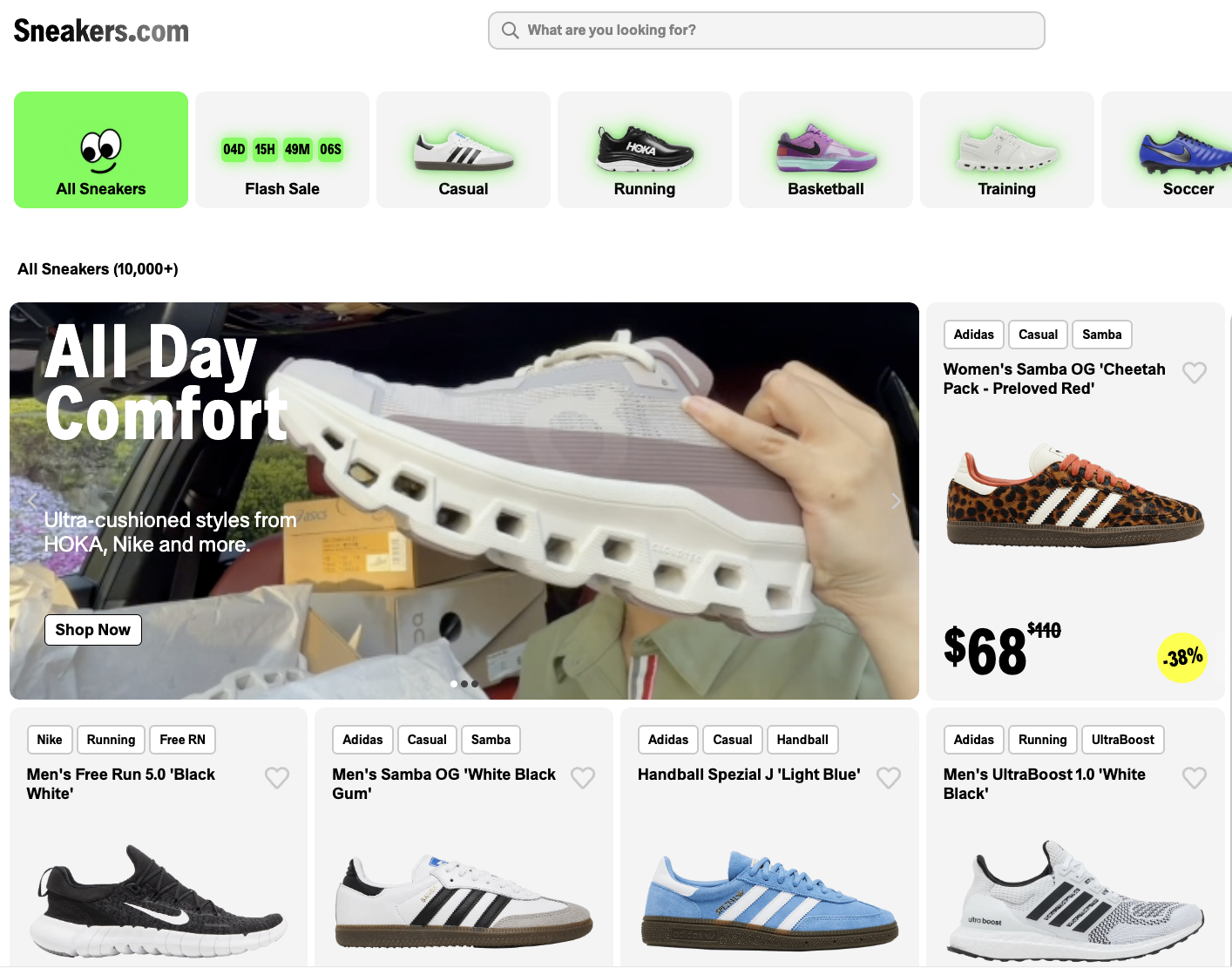
GOAT launching a discount arm is a response to an excess supply problem. When the resale premium disappears on mass-market pairs, those shoes need somewhere to go. Sneakers.com is that outlet.
What is striking, however, is what is not discounted: limited, authenticated, premium pairs. The Sneakers.com average order value of $70 is one-third of GOAT's primary platform average. That gap reflects a real and widening bifurcation in the market. Mass-market pairs are commoditizing. Premium and limited pairs are not.
Fee Pressure on Both Platforms
The Sneakers.com launch also coincides with a period of sustained fee pressure across the major platforms. In 2026, StockX sellers at Level 1 pay a 9% commission plus a 3% payment processing fee. GOAT Level 1 sellers pay 9.5% commission plus a 2.9% cash-out fee on every payout. For premium pairs with significant resale value, those percentages translate to substantial dollar amounts taken out of each transaction — and those fees apply every time the pair changes hands.
A pair with a $1,200 resale value sold through StockX generates approximately $144 in fees at the base level before shipping costs. Sell that pair three times over its lifetime, and fees alone consume more than $400 of its value.
Where Tokenized Vaulting Fits in a Bifurcated Market
The GOAT Sneakers.com launch effectively draws a line. For general-release pairs, the race to the bottom has arrived. For premium pairs — the kind with real secondary market value, with condition-sensitive pricing, with genuine collector demand — the model needs to be fundamentally different.
METAZ operates on the correct side of that line. Premium pairs vault once, authenticate once, and trade via token ownership. Fees per transaction are lower than traditional platforms. The physical asset never ships between buyers. Condition is preserved. For holders of limited pairs in a market that is rapidly separating the investable from the disposable, METAZ is the infrastructure the premium segment requires.
The discount marketplace era is here. For the pairs that matter, the vault era should be too.