


The sneaker resale market compressed significantly. In 2020, 58% of sneaker releases traded above retail. By 2024, that dropped to 47%. Profit margins that once hit 100% now hover around 10-25% per pair for most releases.
When margins collapse, every dollar counts. Smart resellers stopped chasing high-volume strategies and started protecting what matters: keeping more of each sale.
The Margin Compression Reality
Buy Dunks for $150, flip for $400, keep $320 after fees. That was 2020. Same Dunk now sells for $180. After platform fees of 10-19%, sellers net $144-162. They lost money on what should have been a profit.
Stadium Goods and GOAT Group executives confirmed profit margins for sellers have shrunk, though they didn't disclose specifics. The data shows why. Nike oversaturated key silhouettes. Retailers had fewer sellouts. Finding releases at retail became easy. Secondary market premiums naturally dropped.
Economic pressure made it worse. Inflation pushed consumers toward lower-priced options like Nike Dunks, Adidas Sambas, and Gazelles. The average resale profit dropped to $10-25 per pair for standard releases.
Some releases still command premiums. Travis Scott x Jordan collabs averaged $451 resale in 2024, a 197% markup. But those releases are rare. Building a business around hitting one high-margin flip per year doesn't work.
Where Margins Actually Disappear
Platform fees are obvious. StockX charges 9.5-13% for sellers. GOAT ranges from 9.5-15% plus a 5% cash-out fee. eBay takes 13%. On a $200 sneaker, that's $19-39 gone immediately.
But the real margin killers are hidden costs. International buyers face VAT that can reach 20% in EU countries. On a $1,000 sneaker, that's $200 extra. UK buyers pay 20% VAT. French buyers pay 20%. German buyers pay 19%.
Customs duties add another 10-20% on cross-border trades. US imports charge 15% duty on sneakers. EU customs duties range from 8.5-20% depending on materials. A $1,000 sneaker hit with 15% US customs duty costs buyers an additional $150.
Shipping compounds the problem. StockX charges $13.95 for US shipping, up to $30 internationally. GOAT fees run $15-40. Factor in 2-4 week shipping times with damage risks, and the true cost becomes clear.
Add it up: on a $1,000 international sneaker transaction through StockX, total fees can reach $560 between seller fees ($130), shipping ($30), VAT ($200), and customs ($150). Over half the sneaker's value disappears to costs.
When margins compressed to $10-25 per pair, these costs became unsustainable.
What Smart Resellers Figured Out
Savvy resellers adapted by eliminating margin leaks wherever possible. Some shifted to peer-to-peer channels. Reddit's r/Sneakermarket, Facebook groups, and Discord communities let sellers keep 100% of profit and avoid transaction taxes on casual sales.
Storage Costs Nobody Talks About
However, resellers shifting to volume strategies create another margin drain: storage. Buy 50 pairs of Asics across colorways, suddenly you need space. Professional climate control matters for maintaining sneaker value. Temperature fluctuations cause sole separation. Humidity breeds mold. UV exposure yellows materials.
Self-storage units run $50-200+ monthly depending on location and size. Climate-controlled units cost more. Insurance adds another layer. A reseller managing 200-300 pairs easily spends $100-150 monthly just storing inventory.
That's $1,200-1,800 annually in pure overhead before selling a single pair. On $10-25 margins, storage costs consume 5-7% of gross profits.
The pattern is clear: protecting margins means finding opportunities, then moving before margins compress.
Sneakers Through Digital Ownership
METAZ removes margin leaks through a different model: digital ownership of physical sneakers.
Free Climate-Controlled Storage
Sneakers entering METAZ vaults get authenticated once, then stored at no cost to owners. Professional climate control. Full insurance coverage. No monthly fees. No storage overhead eating into margins.
For resellers managing 200 pairs, that's $1,200-1,800 saved annually. On compressed margins, that savings matters.
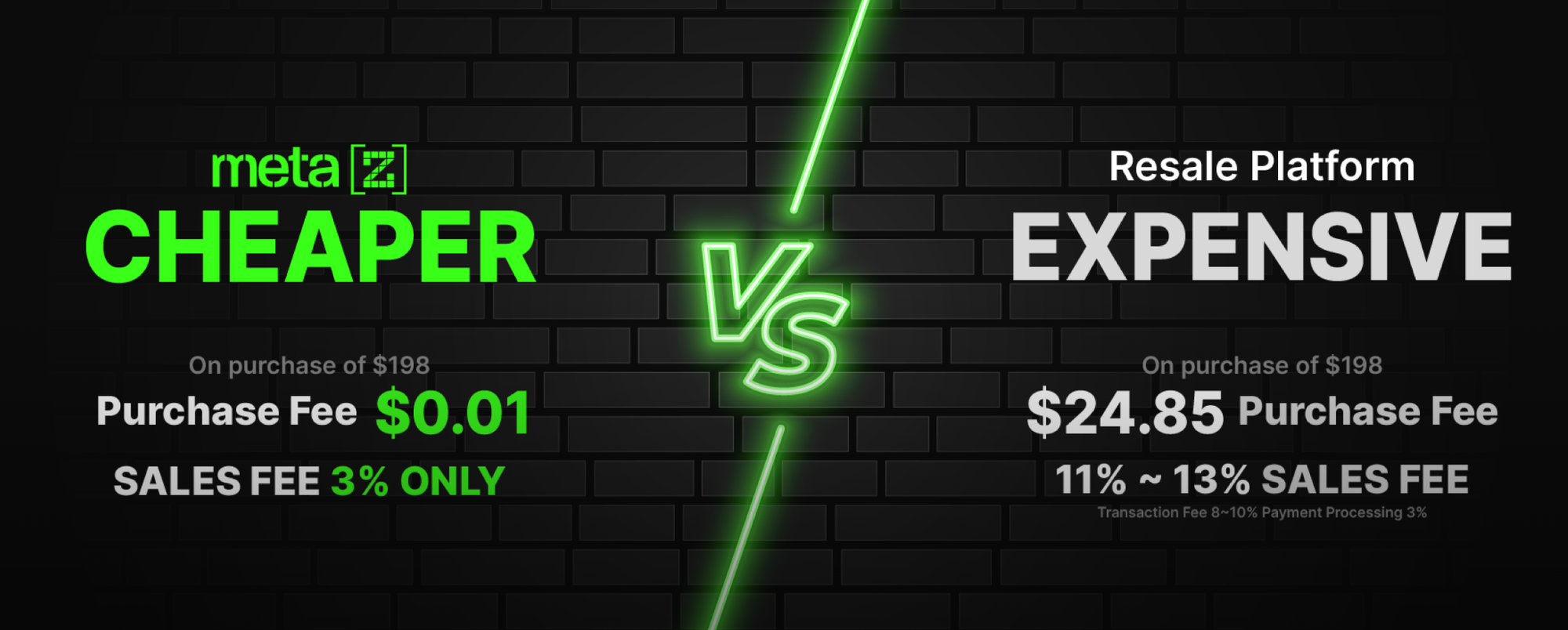
3% Fees vs 10-19%
Traditional platforms extract 10-19% in seller fees. METAZ charges 3%. On a $200 sneaker:
- StockX seller nets: $174 (13% fee)
- GOAT seller nets: $170 (15% fee)
- METAZ seller nets: $194 (3% fee)
The difference compounds across multiple transactions. Flip 100 pairs at $200 each:
- Traditional platforms: $17,000-17,400 after fees
- METAZ: $19,400 after fees
- Savings: $2,000-2,400
When margins compressed to $10-25 per pair, saving $20-26 per transaction through lower fees directly impacts profitability.
Margins Matter More Than Volume
The market shifted from "flip 100 pairs to make $1,000" to "protect every dollar on each flip." Volume strategies still work, but only if operational efficiency preserves thin margins.
Traditional platforms built infrastructure for a different era when 100% margins absorbed 19% fees and $30 shipping charges. That era ended.
Smart resellers now calculate total transaction costs before listing. Platform fees, shipping, VAT, customs duties, storage overhead. They look for ways to minimize each cost because $10-25 margins don't tolerate inefficiency.
METAZ eliminates most of those costs through digital ownership. Free storage removes overhead. 3% fees preserve profits. No VAT or customs during trading protects international margins. Instant global access finds buyers without geographic costs.