

The signals have been flashing red for months, but this week, the sneaker industry got a undeniable wake-up call.
In a one-two punch that rattled both Web3 evangelists and traditional retail investors, headlines broke that Nike is quietly winding down its NFT acquisition, RTFKT, at the same time its subsidiary, Converse, reported a staggering 30% revenue drop.
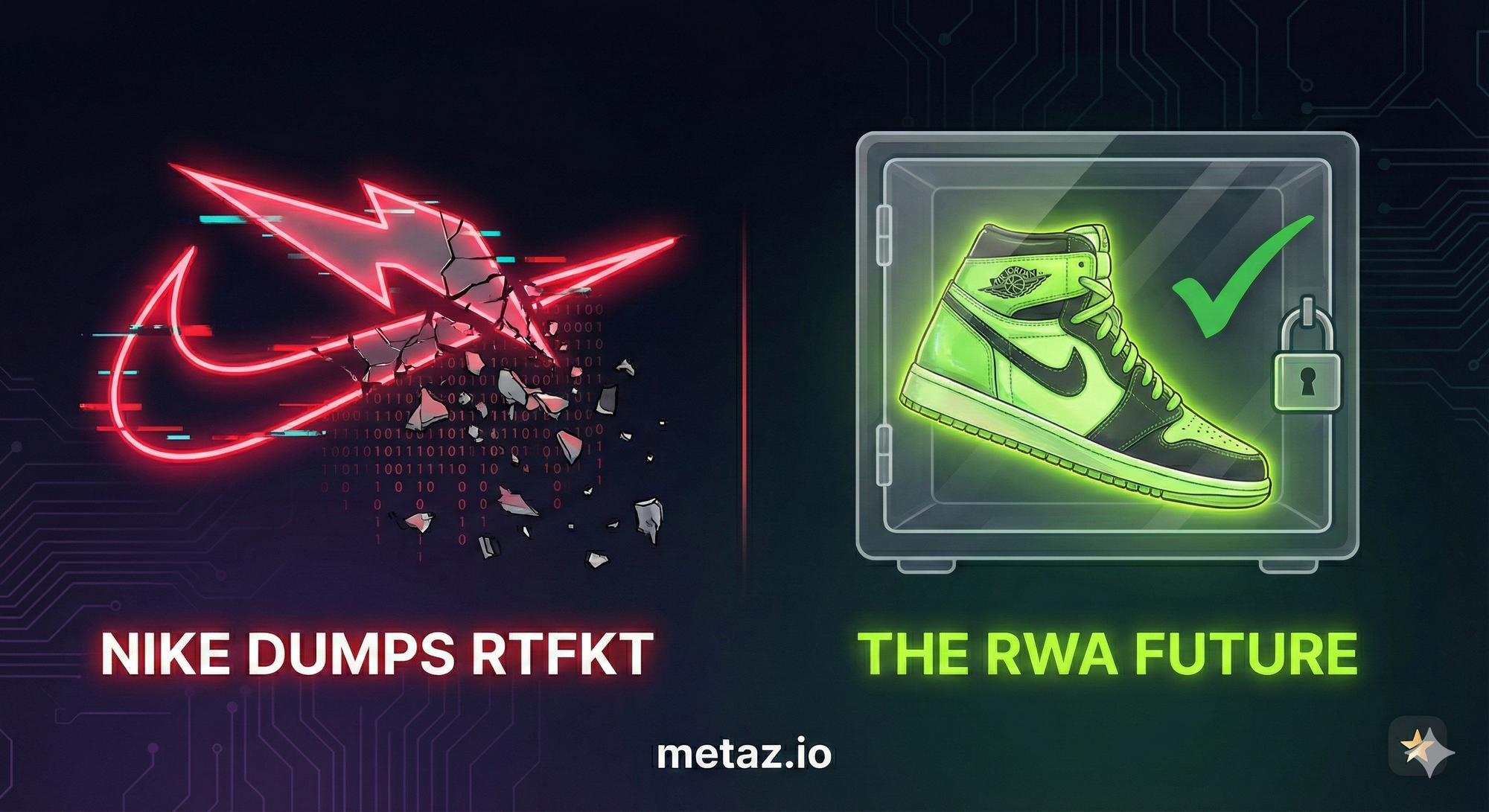
On the surface, these seem like two different stories: one about the failure of the metaverse hype cycle, and another about a heritage brand struggling in a tough economy.
But if you look closer, they are symptoms of the exact same shift. The era of easy speculation—whether it’s flipping a digital picture of a sneaker or banking on endless demand for general releases—is over. The market is maturing rapidly, and it is demanding something that both the initial NFT craze and the traditional retail model failed to provide: real, tangible, frictionless value.
Here is a breakdown of why the giants are stumbling, and why the hybrid model built by METAZ is emerging as the blueprint for the future.
The Crash of "Pure Digital"
In late 2021, at the peak of NFT mania, Nike acquired RTFKT, a digital fashion startup that created virtual sneakers for the metaverse. It felt like the future. Why buy a physical shoe that creases when you could buy a digital one that lasts forever on the blockchain?
The answer, it turns out, is simple: Utility.
When the crypto market cooled and the "metaverse" failed to materialize as quickly as promised, holders were left with expensive digital assets that had nowhere to go and nothing to back them up. Nike’s quiet retreat from RTFKT is an admission that "pure digital" collectibles—assets with zero tether to the physical world—are too speculative to sustain a massive business model.
The lesson here is brutal but necessary: Digital scarcity without physical reality is just vaporware.
The Retail Reality Check
Simultaneously, the news that Converse revenue is down 30% proves that the traditional physical market is facing its own reckoning.
For years, brands relied on the volume game—pumping out general releases and relying on a hungry consumer base with extra cash. But as inflation bites and the market matures, collectors are becoming discerning investors. They aren't buying everything that drops; they are consolidating into "iconic" silhouettes that hold value.
Traditional retail is clunky, geographically limited, and horribly inefficient for secondary trading. The 30% drop shows that the old model of "make it and they will buy it" is breaking down.
The Missing Link: Real-World Assets (RWA)
So, if pure digital is too flimsy, and traditional physical retail is too clunky, what is next?
The answer is the hybrid model. The crypto world calls it Real-World Assets (RWA). At METAZ, we just call it common sense.
The failures of RTFKT and the struggles of traditional retail validate exactly why we built METAZ the way we did. We recognized that collectors want the speed and liquidity of digital trading, but they demand the security of a physical asset.
METAZ solves the two massive problems highlighted by this week’s news:
1. Solving the RTFKT Problem (The Lack of Reality): Unlike the first wave of NFTs, METAZ tokens aren't just digital flexing rights. Every single token on our platform is 1-to-1 backed by a physical, authenticated sneaker sitting inside our secure vault. When you trade on METAZ, you aren't speculating on vapor; you are trading the ownership rights to a tangible asset. The digital token is simply the highly efficient key to that physical reality.
2. Solving the Retail Problem (The friction): Traditional retail is struggling because moving physical boxes is slow and expensive. METAZ removes that friction. By vaulting the physical asset first, we allow the ownership to move instantly across the globe without shipping fees, authentication delays, or logistics nightmares. We took the physical asset—the thing that actually holds value—and gave it the speed of the internet.
The Takeaway
Nike retreating from the metaverse doesn't mean digital collecting is dead. It means the speculative phase of digital collecting is dead.
The market is growing up. It is moving away from hype and toward infrastructure. It is moving away from promises and toward proof.
The future doesn't belong to companies selling digital-only jpegs, nor does it belong to brands relying on outdated retail models. The future belongs to platforms that can bridge the gap—providing the security of the real world with the speed of the digital one.